
The experience of becoming a member of a Masonic Lodge is divided into three ceremonial stages that Masons call “degrees.” The three degrees of Freemasonry are Entered Apprentice, Fellow Craft, and Master Mason. They are loosely based upon the journeyman system, which was used to educate Medieval Craftsmen. Symbolically, the degrees represent the three stages of human development: youth, manhood and age…
THE SECOND DEGREE: FELLOW CRAFT
For the Medieval stonemasons, this degree marked a craftsman’s progression from an apprentice to a journeyman. In Freemasonry, the second degree represents the symbolic growth from youth to manhood as a Brother accepts more responsibility within the fraternity and commits to studying its teachings. As he grows in knowledge, he becomes a “fellow of the craft.”
Many Freemasons consider the second degree among the most moving ceremonies in the craft. At this stage, a Brother is expected to use the wisdom he’s gained through life’s many experiences to face any challenge that may come. During this degree, he delves deeper into the philosophies and symbolism of the craft. He learns about:
- The working tools of a Mason which a Mason uses to build his moral character, guiding him in his conduct and interactions with others.
- The value of learning and education as necessary preparation for becoming the best version of yourself.
- The Twin Masonic Pillars: The symbolic entrance to a deeper and more complete understanding of Masonic enlightenment.
- A Mason’s wages of corn, wine, and oil; critical to the ancient stonemasons, these symbols teach a Mason that he is entitled to rewards for his honest labor as a responsible man.
The Fellow Craft degree teaches a man about the value of an informed mind, therefore preparing the candidate to take his place in the world as a good citizen, friend, and family man. This ceremony deepens the candidate’s connection to himself and, above all, teaches the Fellow Craft to be just with all mankind.
PRIVILEGES OF FELLOW CRAFT
Upon completion of the second degree, a Brother is now eligible to attend lodge meetings of the Entered Apprentice and Fellow Craft Masons. While not yet eligible to attend meetings in the Master Mason degree, he may begin his preparation for the third and final degree by putting into practice the lessons he has learned as an Entered Apprentice and Fellow Craft. Once a Fellow Craft, a man stands as a living example of enlightenment and wisdom; a mature man prepared to honor the secrets of Freemasonry and face the responsibilities of adulthood.
Want to learn more about the other Masonic degrees? Click here to read about the Third Degree: Master Mason.
THE THIRD DEGREE: MASTER MASON
As the final and highest honor in Freemasonry, the Master Mason degree symbolizes man’s maturity through increased knowledge and wisdom. It is the culmination of all he has learned through the first degrees, including how to prepare for spiritual enlightenment through the craft’s teachings.
In the third degree, a candidate now learns to act with courage, fidelity, and devotion to his God. The Master Mason ritual emphasizes the immortality of man’s soul and encourages us to contemplate how this should influence our actions and decisions. The candidate also strengthens his knowledge of the ethical principles of Freemasonry as he encounters:
- The story of Hiram Abif, a moving allegory expressing the importance of fidelity and the inevitability of death.
- The lost word, which represents a Freemason’s never-ending search for light, truth, and connection with his God.
- New core Masonic symbolism, including the beehive, trowel, the hourglass, acacia sprig, and many others.
PRIVILEGES OF A MASTER MASON
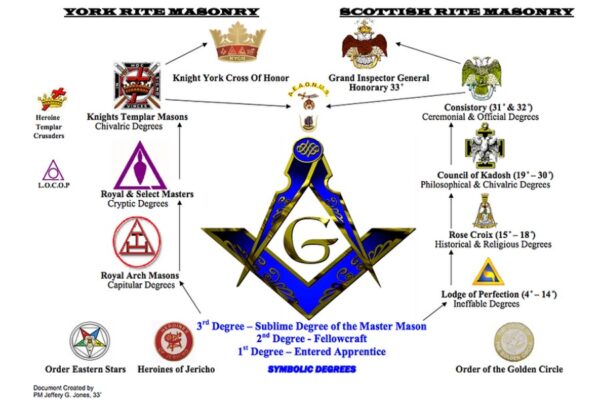
As a Master Mason, a man is free to follow his own path in the craft and is entitled to the benefits of full membership. He can study in greater depth the philosophy that underlies our ceremonies and aspire to leadership positions in his lodge and greater Masonic community. While Master Mason is the highest rank in Freemasonry, many Brothers choose to continue their study and training in the craft by joining appendant bodies such as The Scottish Rite (32° Freemasonry), The York Rite, and The Shrine (or “Shriners”), among others.
A Master Mason may also:
- Visit other Masonic lodges
- Request Masonic relief
- Affiliate with a new lodge upon relocation
- Appear in public Masonic processions
- Be taught all lessons that Masonry has to offer
As a Master Mason, a man is obliged to abide by the laws, constitutions, and edicts of his Grand Lodge. He is expected to conduct himself with honor and integrity, upholding the core Masonic tenets of Brotherly Love, Relief, and Truth. Freemasonry is a lifelong journey, and thoroughly absorbing the lessons of the degrees requires constant reflection. By returning to lodge, witnessing the degrees, and becoming an active part of the Masonic community, a man can build himself into a better man.